Complete freelancing guide for beginners
Eman mani · July 5, 2026
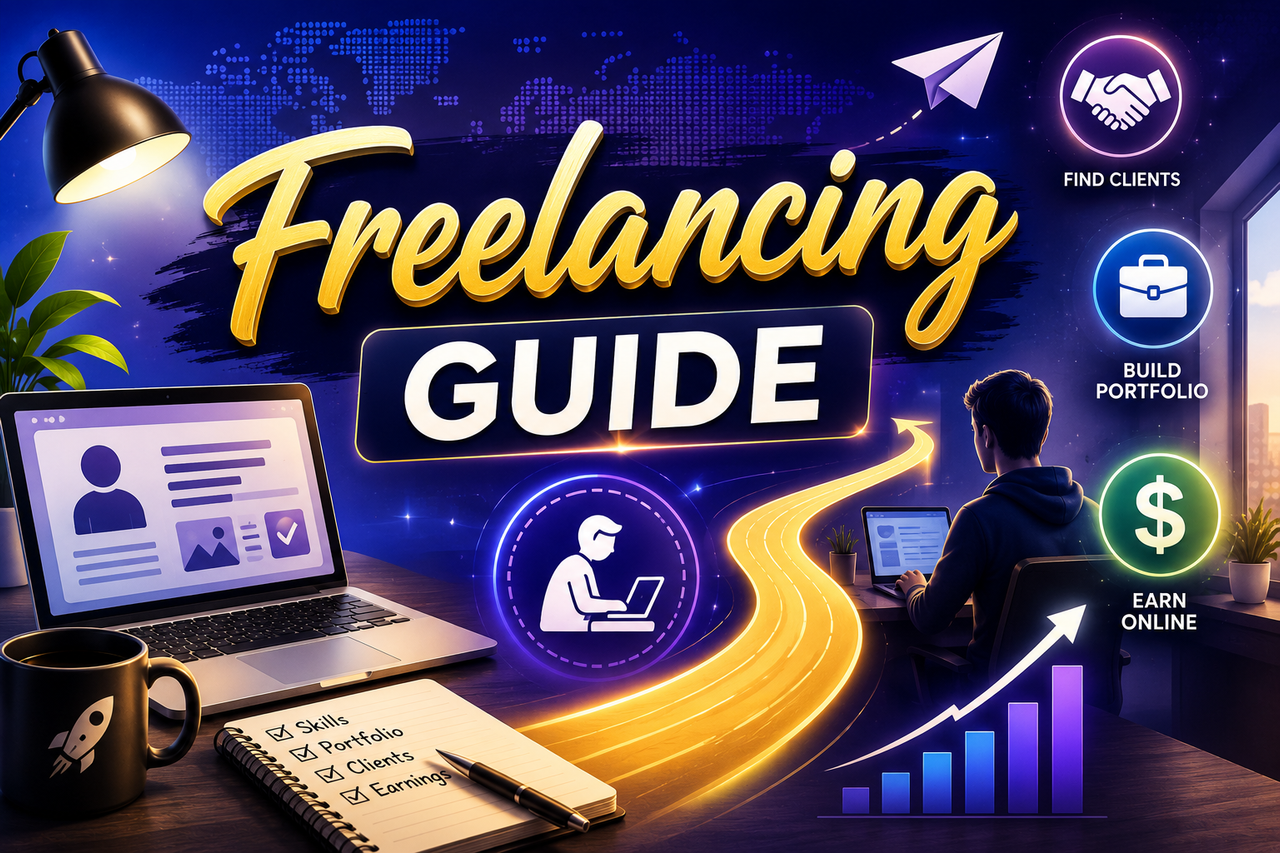
Basic steps to start freelancing and its importance and benefits
The Complete Freelancing Guide for Beginners (2026 Edition) Freelancing has come a long way from being an unconventional career option to becoming one of the most common ways to work. Millions of people earn at least some or even most of their money outside the 9-to-5 routine, and 2026 looks like one of the best years to become a freelancer ever. Remote hiring is a common thing, software allows individual freelancers to compete against agencies, and everyone is ready to pay professionals for their work. But “simply become a freelancer” is easier said than done. Here is what you need to know in order to get started without any unnecessary stuff. Why Starting in 2026 is a Good Idea Several reasons make this year especially good for newbies: - AI as an accelerator, not a replacement. Freelancers are in more and more demand because they are able to do things with the help of AI faster and more cheaply than people can. If you manage to harness AI, you can be ahead of not only other freelancers, but also agencies. - Hiring across the globe is a thing. It means that your competitors are all over the globe, but also your market is worldwide. - Low entrance barrier. You don’t need any website or registered company to get your first paying customer – just a good portfolio and a profile on the proper platform. - Diverse sources of income are appreciated. Even employed people start doing some freelance to be prepared for any situation. 2. Choosing a Freelance Skill Should you not have an in-demand skillset yet, look for one that is popular, easily learnable in a couple of months, and one that you could feasibly enjoy performing for several hours each day. Some good skills for beginners in 2026 include the following: - Writing and content– blogs, SEO articles, copywriting, technical writing, ghostwriting newsletters. - Design – graphic design, UI/UX design, presentation design, brand identity. - Web and app development – front-end development, WordPress/Webflow websites, app prototyping. - Digital marketing– social media marketing, advertising, email marketing, SEO. - Virtual assistance and operations– inbox management, scheduling, customer service, coordination. - AI-related services – prompt generation, AI workflow optimization, chatbot configuration, AI copyediting and fact checking. - Video and audio editing– short-form video editing, podcast editing, motion graphics. If you do not know what skills might suit you, choose the one in which you already have some experience or some interest, even if it is somewhat rudimentary. Beginners tend to overestimate the level of knowledge they need before starting to get paid for their skills; clients only need something that is “good enough” and delivered on time. 3. Creating a Portfolio Without Experience The classic dilemma of having no portfolio because no clients, and having no clients because no portfolio is your main barrier. Here’s how to crack it: 1. Make spec work. Select an existing company that you think is cool, design their landing page, rewrite their website copy, or edit some videos they have created. Make sure it is clearly labeled as concept work. 2. Complete a couple of projects at a reduced rate, or even for free, however for a very limited time (2–3 projects max) in return for a testimonial and permission to use this work in your portfolio. 3. Keep screenshots of your work process, and the outcome. Clients pay for results, not efforts, therefore try to frame your portfolio on results whenever possible (“increased the email open rate by 22%” vs. “wrote the email campaign”). 4. Use simple platform.You can use any Notion page, one-page website or even a decently organized Google drive as your portfolio at first. There is no need to have a fancy website right away – don’t let that be a barrier to approaching new clients. 4. How to Get Your First Customers You have three basic approaches at your disposal, and almost all successful freelancers ultimately use all three. Freelancing Sites The well-known freelance sites such as Upwork, Fiverr, Freelancer.com can still be a good option to start with since here the clients come to you. The disadvantage of these sites is increased competition and commission fees for using the platform. The ways to make yourself noticed there are the following: - Have a niche-focused profile instead of a general one. - Respond to several highly relevant job postings with customized offers instead of applying to everything blindly. - Start offering cheaper prices for your first 3-5 job postings to get positive reviews, then increase the cost of your services. Cold and Warm Pitching It usually takes less time to get higher paying customers by contacting businesses in a cold and/or warm manner through email, LinkedIn, and even through Instagram messages since you do not compete in price terms within the marketplace. Networking and Referrals Use the power of your existing network! Inform your friends, ex-colleagues, and online communities about what you have to offer. Just one satisfied customer can bring several more referrals, and referral clients are usually easy to close deals with and less sensitive to prices. 5. Pricing Your Services This is where newcomers make mistakes the most; it’s too common to underprice your work in fear of losing the customer. Here are some useful tips: - Try not to use an hourly rate as much as possible. It limits your earnings and makes you suffer from being fast at work. - Always do thorough market research before deciding on how to price your work. - Increase your prices every 3-5 clients. It’s important especially when you already have some testimonials and a pipeline of customers. - Don’t position yourself as the cheapest service provider. The cheapest option usually attracts the most demanding customers. 6. Contracts, Payments and Securing Yourself Even a little freelance project should have at least some formality involved in it: - Have a basic contract about scope, timeframe, payment and revision. Many templates can be found online for free and Upwork has a built-in agreement too. - Be paid ahead or by milestones for bigger projects (50% deposit, 50% upon delivery) – it will secure your cash flow. - Use services designed for freelancers for invoicing and payment – it will organize your finances well and will look much better to the client. - Keep track of your earnings and expenses from the very beginning. Freelance income in almost all countries is considered taxable and it is always better to develop the right habit from the start. Consultation with an accountant about local taxes will pay off many times – this article doesn’t replace professional tax or legal consultations. 7. Working With Clients and Communicating It is your technical skill that lands you the job; your ability to communicate earns you more work in the future. A few things that make a professional freelancer different from an amateur: - Be responsive – even if it is a simple “got it; will read it and get back to you tomorrow.” - Set clear expectations about deadlines, number of revisions, availability, etc. - Provide proactive updates rather than being asked about everything. - Don’t shy away from dealing with scope creep. If the client is requesting additional services outside the initial agreement, it is always acceptable to say, “Sure thing; here’s an add-on price.” 8. Guarding Against Burnout and Creating Sustainability There are freedoms inherent to being a freelancer, but without organization, it may be a lot more tiring than having a traditional job. Here are some things to watch out for: - Feast-or-famine cycles. A lot of freelancers are only looking for clients when business is slow. It’s a good idea to develop the practice of doing a little networking/ marketing every single week, no matter what. - Undervaluing leading to overworking.When you feel yourself working an unreasonable number of hours while earning very little money, the problem isn’t your ethic, it’s your pricing. - No structure.Establish hours during which you’ll work and make sure your clients know that. - No cushion.Try to create a bit of savings (ideally several months’ worth) as soon as you can, because being a freelancer means not knowing how much you’ll earn each month. 9. Your First 90 Days: The Short Route - First 2 weeks : Identify your niche and create a lean portfolio (you can have 2–3 pieces), as well as profiles in one or two freelancing platforms. - Next 4 weeks: Apply to 5–10 freelance jobs weekly and send 5–10 outreach emails weekly. See what works and adjust your approach. - Next 4 weeks: Make sure to execute your first projects flawlessly and get referrals or testimonials while raising rates for new customers. - Last 3 weeks: Develop your systems and processes (contracts, invoices, a basic leads and income tracker), and develop your marketing routine. Conclusion The freelance game of 2026 is kind to those who approach their work like a business right from the start: having a solid niche, developing an outcome-oriented portfolio, communicating with clients consistently, and pricing your services correctly based on the value you provide. You won’t need any experience or massive following to start your career – all you will need is a single client who wants to hire you.