Easy guide to get first client on fiver
Eman mani · July 5, 2026
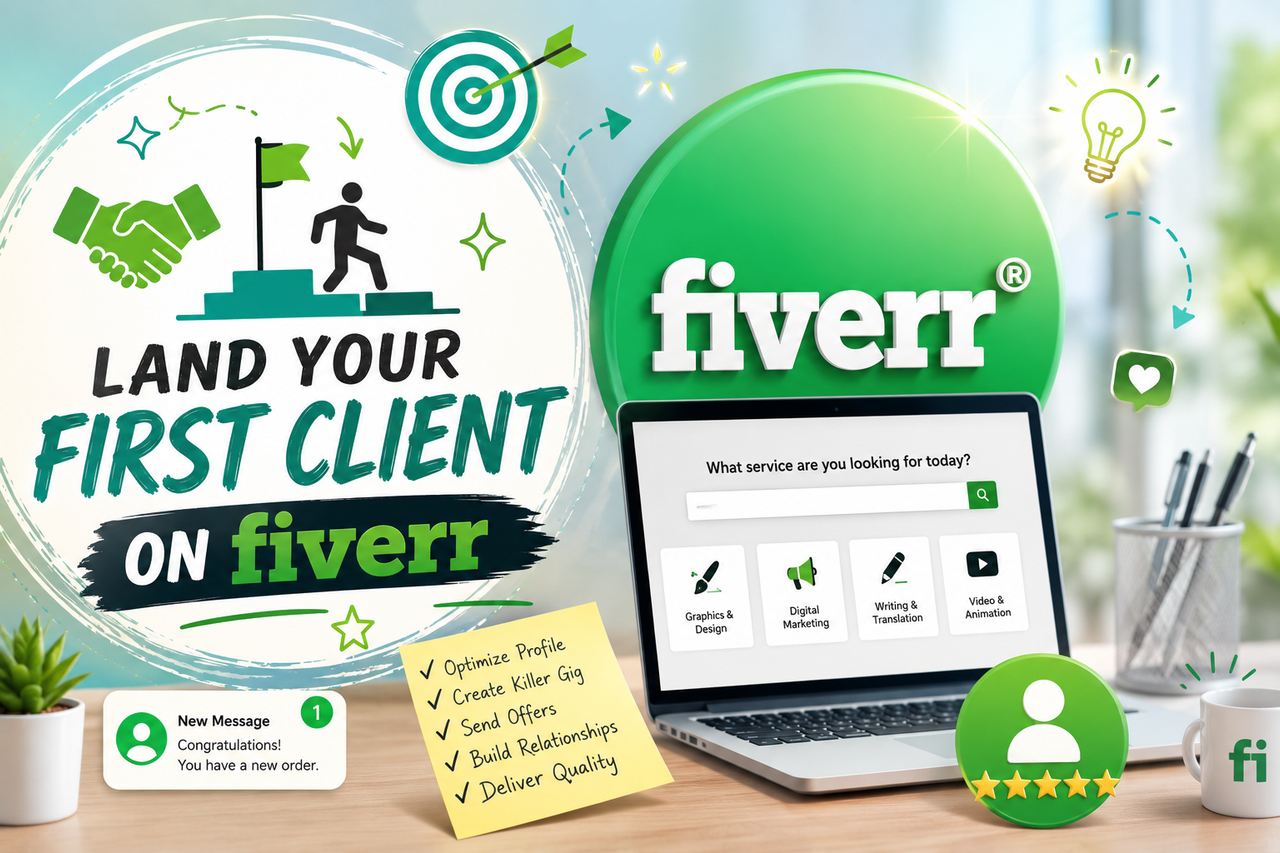
Complete step by step guidelines and tips to get your first client on fiver
How to Land Your First Client on Fiverr: Creative, Authentic Strategies That Actually Work Getting your first order on Fiverr can feel like the hardest part of freelancing. You've set up your gig, written a description you're proud of, maybe even added a few mockup images - and then... Silence. No orders. No messages. No reviews. Here's the truth: the first client is always the hardest to get, and it's rarely about luck. It's about standing out in a sea of sellers who all say the same things ("fast delivery," "100% satisfaction," "unlimited revisions"). Below are practical, creative, and genuinely authentic ways to break through that silence and land your first paying client. 1. Stop Trying to Look "Professional" - Try to Look Real New sellers often copy the tone of big agencies: stiff, corporate, generic. But buyers on Fiverr, especially small business owners, are looking for a real person who understands their specific problem. - Write your gig description like you're talking to one person, not a crowd. - Mention a specific type of client you love working with ("I help podcast hosts turn raw audio into clean, professional episodes"). - Add a short personal note in your profile - where you're from, why you do this work, what you're best at. Authenticity builds trust faster than polish does. 2. Give Away a "Loss Leader" Gig Consider creating one small, genuinely useful gig priced very low (or even offering the first version free to a specific person you find manually) purely to get your foot in the door. - A logo designer might offer a "3 logo concepts for $5" gig just to build initial reviews. - A writer might offer a free 300-word sample for the first 3 buyers who message them. The goal isn't profit - it's proof. One five-star review from a real transaction is worth more than a week of tweaking your gig images. 3. Reverse-Engineer Buyer Requests Most new sellers only wait for buyers to find them. Instead, actively use the Buyer Requests tab (if available in your category) and treat every request like a mini-application: - Personalize each response - mention their project by name or detail. - Include a tiny free sample relevant to their exact request (a one-line tagline, a 10-second voice sample, a rough sketch). - Keep it short. Buyers scanning 20 offers won't read a wall of text. 4. Build "Proof" Before You Have Reviews No reviews yet? Create your own case studies: - Design a fake or personal project (a rebrand for a fictional coffee shop, a sample article on a trending topic) and showcase it in your portfolio. - Offer to do a free micro-project for a friend's small business in exchange for a genuine testimonial you can screenshot (with permission) and post on your gig. - Turn old freelance or student work into polished portfolio pieces, even if it wasn't originally paid work. Buyers care about evidence of skill, not just star ratings. 5. Use Social Proof from Outside Fiverr Bring in credibility you've already built elsewhere: - Link to a personal portfolio site, Behance, GitHub, or Instagram if it strengthens your case. - If you've done freelance work on Upwork, Instagram, or through word-of-mouth, mention it briefly in your gig description ("Trusted by 10+ small business owners for logo design"). - Share a relevant post about your niche on LinkedIn or Twitter/X and casually link your Fiverr gig in the comments if someone asks where to hire you. 6. Niche Down Ruthlessly "I do graphic design" is invisible. "I design minimalist logos for eco-friendly and sustainable brands" stands out immediately to the right buyer. - Pick a specific niche you understand or are passionate about (fitness coaches, Etsy sellers, podcasters, SaaS startups). - Tailor your gig title, description, and images to that audience specifically. - Niching down feels scary (fewer people fit the description) but it dramatically increases conversion because the right buyer feels like the gig was made for them. 7. Make Your Gig Images Do the Talking Most buyers scroll gig thumbnails before reading anything. Creative, clear visuals can single-handedly get you clicks: - Show a clear before/after example, even a simple one. - Use a short looping video (10-20 seconds) demonstrating your process, not just the final result. - Avoid generic stock photos - buyers can spot them instantly and they erode trust. 8. Respond Like Lightning (Especially Early On) Fiverr's algorithm and buyers both reward fast responders. In the first weeks: * Turn on notifications and check messages several times a day. * Respond within minutes if possible, even just to say "Got your message, give me 10 minutes to look at this properly." * A fast, thoughtful reply often beats a slower, more "perfect" one. 9. Turn Rejections Into Relationships Not every inquiry converts to a sale - but many can convert to future ones if handled well. * If someone messages but doesn't order, follow up politely a few days later with a helpful tip related to their project (no strings attached). * Save every conversation. A "no" today can become a "yes" three months later when their needs change. 10. Leverage Your Existing Network Quietly You don't need to spam friends and family, but a subtle nudge can help: * Post about your new Fiverr gig on your personal social media with a short, honest story about why you started. * Ask 1-2 people you trust to check out your gig and share honest feedback (and maybe be your very first real client). * Join niche Facebook groups, Reddit communities, or Discord servers related to your skill and genuinely participate - helpfulness builds visibility over time, without feeling like advertising. 11. Optimize for the Right Keywords, Not Just Volume Buyers find gigs through search. Instead of stuffing generic high-competition keywords: * Think like your ideal buyer: what would they actually type? ("shopify product descriptions" vs. Just "writing"). * Use those specific phrases naturally in your title, tags, and description. * Update and tweak based on which gigs get impressions but no clicks - that's a sign your image or headline needs work, not your price. 12. Treat Your First Client Like Your Most Important One Once you do land that first order: * Over-deliver slightly (a small bonus revision, a helpful tip, quick turnaround). * Ask specifically and politely for a review once they're happy - many buyers simply forget. * Use their feedback (with permission) as a testimonial and add it to your portfolio or gig description. That first five-star review often triggers a snowball effect - Fiverr's algorithm favors gigs with recent positive activity, and future buyers trust reviews far more than promises. Getting your first Fiverr client isn't about tricking the algorithm - it's about proving, in a very short window of attention, that you're a real, skilled person who understands a specific problem better than the next seller. Combine genuine niche focus, visible proof of skill, fast responsiveness, and a bit of creative hustle outside the platform, and that first order will come faster than you think. Once it does, don't stop there - the second, third, and tenth clients get progressively easier as your profile builds momentum.