Mental fitness, How the sleep affects mental health
Eman mani · June 26, 2026
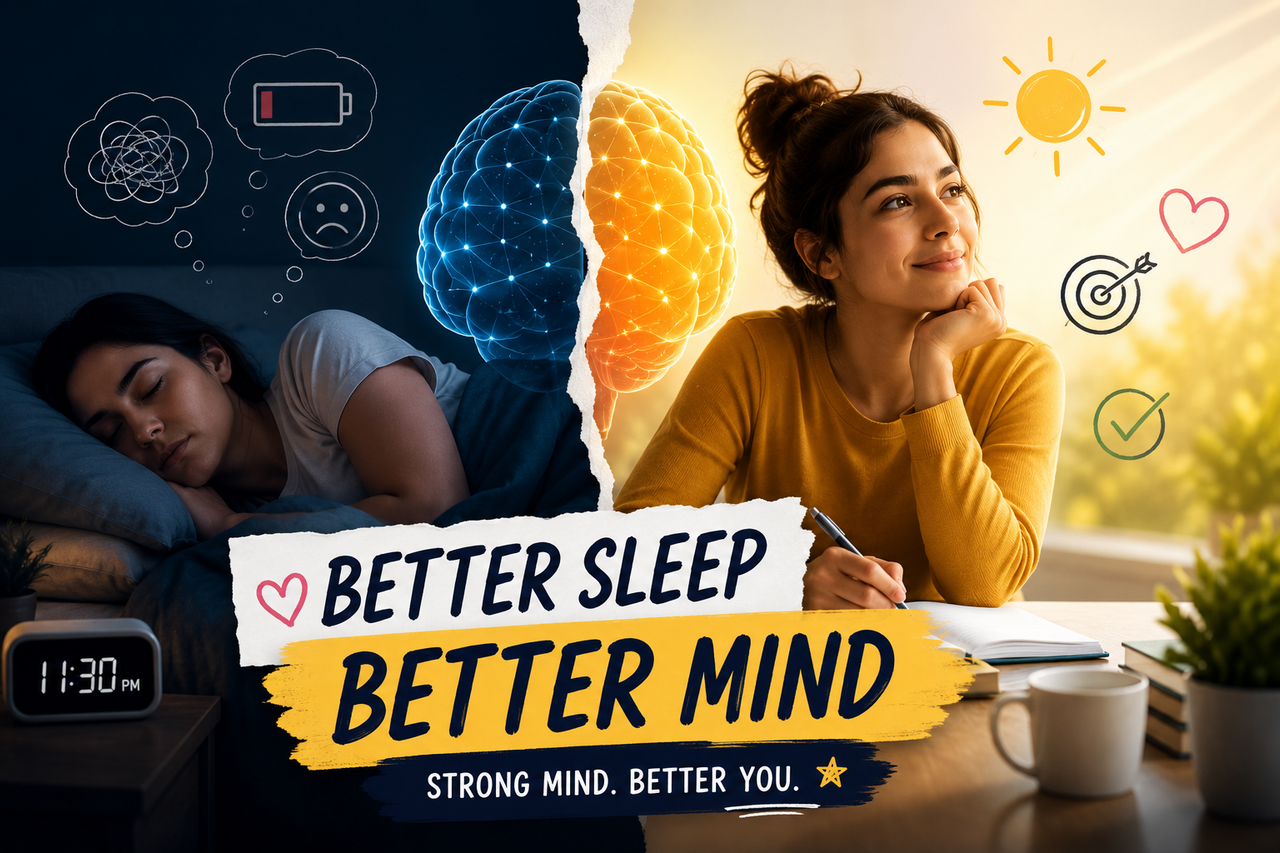
Mental fitness the Life skill no one ever teaches-why it matters for today's youth in2026 . Evidence based strategies to help sleep and mental health
Mental Fitness and its relation with sleep cycle . The Life Skill No One Ever Teaches – Why It Matters for Today’s Youth in 2026 Mental fitness will be just as crucial as physical fitness by 2026. This generation is expected to face pressure from studies, lack of job security, social media competition, and challenges of staying up-to-date in a rapidly changing world. Consequently, many experience stress, anxiety, and emotional fatigue even before joining the workforce. Mental fitness will allow them to cope with all the mentioned issues properly. It is about being able to concentrate, cope with stress, adapt to adversities and be emotionally stable. When schools teach children academic skills, mental fitness serves as the basis for their success both in and out of the classroom. In this article, I will explain what mental fitness is, how important it is for today’s youth, and provide five easy-to-follow habits that can help to develop it. What Is Mental Fitness? Mental fitness is not about being happy always; rather, it includes the capability to overcome obstacles, rebound from setbacks, regulate your emotions, and remain productive even during stressful times. Basic practices like writing in a journal, good communication, being mindful, and unplugging from electronic gadgets can greatly help develop mental fitness over time. Mental fitness will enable you to make better decisions and help you build good relationships and accomplish your goals in life. Why Mental Fitness Matters More than Ever in 2026? 1. Years have Passed and Young People Are More Pressurized Now Than Before The present generation has many things on their plate, including academic pressure, career pressure, social commitments, and self-improvement. The availability of information round the clock makes it very hard to take a break. 2. Social Media Facilitates Endless Comparisons Social media is responsible for the ease with which we can make comparisons between ourselves and other people. In fact, many youths compare themselves with influencers, entrepreneurs, or fellow students who seem to be getting ahead. The challenge here Is that social media tends to share the best moments in the life of someone. Comparisons can be detrimental in lowering one’s self-confidence and establishing unrealistic expectations. Mental fitness will enable people to concentrate on their journey rather than comparing themselves with successful individuals on social media. 3. Human Skills Are Important in the Era of Artificial Intelligence AI technology can be used to write content, code, design, and carry out other tasks. But, there are certain qualities such as emotional intelligence, resilience, leadership, critical thinking, and stress management that are distinctly human. It Is now clear that employers want employees who can perform in situations where there is pressure, cooperate with other people, and embrace change. 4. Family Expectations and Societal Pressures Bring Additional Stress Family expectations, academic pressures, money issues and society opinions put a lot of stress on young people. These problems can impact mental health whether you live in a big city or small town. Mental fitness gives practical skills that will help in coping with stress, expressing emotions and asking for help when it is necessary. It is not a luxury but an important skill that everyone should develop. Five Simple Steps To Be Mentally Fit You do not need to drastically change your life to be mentally fit. Several little daily steps can bring a noticeable improvement. 1. Have Ten Minutes Off Your Phone Each Day Spend at least ten minutes each day without phone and social networks. Just relax, breathe deeply or do nothing during that time. 2. Keep a Gratitude Journal Write down three things you are grateful about before falling asleep. This simple habit will make your mind more positive and will distract from negative thoughts. 3. Speak With A Trusted Person Just having one person who you can share your thoughts with makes a huge difference. It releases emotional stress and brings you different perspective on everything. 4. Recognize Your Feelings Rather than denying your emotions, identify them. Saying things like, “I feel stressed,” “I feel disappointed,” or “I feel anxious” will help you get a better grip on your emotional state. 5. Get Adequate Rest Rest is one of the main keys to cognitive functioning. Getting between seven and eight hours of sleep daily makes it easier to concentrate, think and manage stress. How sleep cycle affects mental well being Understanding Sleep Cycles: What Happens When We Sleep? It is important to know the mechanics behind the process before delving into its link to mental well-being. An entire sleep period is not a homogeneous process; it is divided into 90-minute cycles that comprise four stages: • -Stage 1 (NREM – Light Sleep): The stage of the transition from consciousness to sleep. The body is starting to become more relaxed, heartbeat slowing down, and brain activity calming. • -Stage 2 (NREM – Intermediate Light Sleep): A decrease in body temperature, cessation of eye movement, and appearance of sleep spindles. This is the stage when you spend most of your sleeping time. • -Stage 3 (NREM – Deep Sleep/Slow-Wave Sleep): A stage where physical recovery takes place. Hormones responsible for tissue regeneration and growth and the strengthening of the immune system are secreted. • -Stage 4 (REM – Rapid Eye Movement Sleep): A brain activity peak reaching almost waking state. Dreams occur mostly during this stage. The Mental Health Impact of Sleep: What the Science Says Sleep and Anxiety: An Evil Circle Anxiety is the most prevalent mental problem worldwide – and its link with sleep has never been simple. - Lack of sleep leads to anxiety. If the person does not get enough REM sleep, their brain is always ready to react to potential threats. - Anxiety disrupts sleep. Thoughts running wild, increased arousal, and bodily tension prevent sleeping. Thus, the vicious circle makes sleep problems and anxiety reinforce one another and become increasingly harmful if left untreated. The studies have demonstrated the fact that people with insomnia were 10 times more likely to experience anxiety disorder than those with normal sleep. Sleep Deprivation and Depression There are numerous conditions that have been extensively researched in psychiatry; however, the interconnection between sleep and depression belongs to the top ten of them. More than 90% of patients suffering from major depression experience severe disturbances in their sleep patterns, including both insomnia and excessive sleep. Sleep deprivation is not only an accompanying factor but a possible cause of depression. Indeed, sleep disturbance results in: - Decreased synthesis of serotonin (mood stabilizer) - High levels of cortisol (stress hormones) - Poor neuroplasticity (formation of positive neural pathways) However, there is one more aspect that is particularly important when talking about the influence of disrupted sleep on depression — poor management of the activity of the default mode network the brain circuit responsible for self-referential thinking and rumination. Evidence-Based Strategies to Help Sleep and Mental Health 1. Keep Regular Sleeping Hours Sticking to regular sleep hours daily, including weekends, ensures regularity in your circadian rhythm and contributes to deep sleep cycles. 2. Ensure a Safe Sleeping Environment The best environment should be cool (between 65-68°F or 18-20°C), dark, and quiet. Such conditions alert your brain of the time for sleeping mode. 3. Avoid Exposure to Blue Light at Night Blue light inhibits the production of melatonin. Try to avoid using any screens 60 minutes prior to bedtime. 4. Be Conscious of Caffeine and Alcohol Intake The half-life of caffeine is about 5-7 hours which means that after-lunch caffeine will still affect your body at midnight. The use of alcohol will help you fall asleep faster but will negatively impact the quality of REM sleep. 5. Utilize Relaxation Techniques Progressive muscle relaxation, deep breathing, and mindfulness meditation are well-researched techniques which help reduce sleep-onset anxiety. 6. Get Morning Light Getting natural light in the morning is one of the best things you can do to reset your circadian rhythm. Even taking a 10-15 minute walk outside in the morning will help you adjust your sleep schedule. 7. Exercise Often but Not Late Exercise has proven to be one of the strongest interventions for improving sleep quality and mental well-being. However, strenuous workouts too close to bedtime may have stimulating effects that can push back your sleep time. 8. Cognitive Behavioral Therapy for Insomnia (CBT-I) CBT-I is the first-line recommended therapy for chronic insomnia at this time and has been found to be better than medication in the long run for treating poor sleep. Frequently Asked Questions 1.Can improving my sleep really help me to feel less anxious? Absolutely. One of the best ways to reduce baseline anxiety is by sleeping better. Studies have shown that when you address your insomnia, there will be a reduction in anxiety symptoms regardless of any other treatment. 2_How quickly can I recover from sleep deprivation? Recovering mild sleep deprivation can be achieved by just a few nights of restful sleep. But recovery from chronic sleep deprivation takes a lot longer due to the negative impacts that have been accumulated by the brain. 3_Can taking naps help with my mental well-being? Yes, as short naps (around 10-20 min) make people more alert and happy. But longer naps (especially in the afternoon) can affect your capability to sleep at night. 4_Is my sleep problem a symptom or the cause of my mental disorder? It’s both. Poor sleep is usually associated with certain disorders such as anxiety and depression, but it is also a cause of them. It's sure that it will help you to make your sleep cycle normal . Thanks